Hydrotherapy for
Everyday Wellbeing
The Science Behind Hot Soaks
Discover how at-home hydrotherapy can support arthritis and joint pain relief, ease lower back discomfort, relax tired muscles and encourage low-impact movement. Stoked hot tubs, spas and swim spas offer a soothing way to make warm-water recovery, relaxation and everyday wellbeing part of your routine.
Intro to Hydrotherapy
There is something instinctive about getting into water.
A warm bath at the end of a long day. A cold lake on a clear morning. Sitting outside in a hot tub as the temperature drops around you. Long before anyone called it hydrotherapy, people understood that immersion in water could change the way they felt.
Modern research is beginning to explain why.
Scientists studying warm-water immersion, passive heating and cold-water immersion have found evidence that carefully controlled exposure to different water temperatures can influence sleep, stress, circulation and our perception of wellbeing. Some of these effects are well established. Others, particularly many of the claims surrounding cold plunges, remain promising rather than proven.
That distinction matters.
At Stoked, we like the idea of wellness being simple. Less biohacking. Fewer miracle claims. More time outside, more time in the water, and a reason to stop for a while.
So, what does the research actually tell us about hydrotherapy?
What is hydrotherapy?
At its simplest, hydrotherapy is the use of water to support physical or mental wellbeing.
It can include warm baths, hot tubs, spas, cold plunges, contrast bathing and other forms of water immersion. Temperature, immersion depth and duration all change the way the body responds.
Warm water increases peripheral circulation and changes the way the body regulates heat. Cold water does almost the opposite at first, constricting blood vessels and triggering an immediate physiological response to the cold.
Neither needs to be extreme to have an effect.
And while hydrotherapy is increasingly associated with dedicated wellness centres and recovery facilities, one of its greatest strengths is how easily it can become part of an everyday routine.
Warm water and the art of Relaxation
A hot soak feels good after a difficult day for a reason.
Warm-water immersion produces a number of measurable physiological changes. Heart rate generally rises while peripheral blood vessels dilate, changing circulation and the body’s management of heat.
There is also emerging evidence that the experience can influence stress.
A 2024 randomised crossover study published in the Journal of Thermal Biology asked 20 adults to complete 30-minute hot-water immersion sessions beginning at approximately 39°C. Researchers measured cardiovascular responses as well as anxiety and salivary cortisol, a commonly used biological marker associated with stress.
Following hot-water immersion, both reported anxiety and salivary cortisol were reduced. Interestingly, researchers found no additional stress-relieving benefit from underwater massage compared with simply sitting in the warm water.
Sometimes, it appears, the water itself is enough.
It is only one relatively small study, so it would be premature to describe a hot tub as a treatment for anxiety or chronic stress. But it supports something many people recognise intuitively: warm-water immersion can create a genuine physiological shift from the state we were in before getting into the water.
That matters in a world where switching off has become surprisingly difficult.
Why getting hot can help you cool down
The mechanism behind the “warm bath effect” is slightly counterintuitive.
Getting into warm water heats the skin and increases blood flow towards the hands and feet. When you get out, this increased peripheral circulation helps the body dissipate heat.
Your core body temperature subsequently begins to fall.
That cooling process matters because human body temperature naturally follows a daily rhythm. Core temperature begins declining as we approach our normal sleeping period, working alongside other circadian signals that tell the brain it is nighttime.
A warm soak before bed may help reinforce that process.
Rather than simply making you sleepy because you are warm and comfortable, the useful part may actually be what happens afterwards as the body starts cooling.
More recent research has continued to strengthen the connection.
A 2026 systematic review and meta-analysis published in the International Journal of Biometeorology examined ten randomised controlled trials of water immersion thermotherapy. Researchers found significant improvements in both total sleep time and sleep efficiency.
Importantly, they did not find significant improvements across every measure of sleep, including several subjective measures. The researchers therefore concluded that warm-water immersion appears to have genuine sleep benefits, but that those benefits have limitations.
That is probably the most useful way to think about hydrotherapy in general.
It can support good sleep. It does not replace it.
Building a better evening ritual
Research does not give us a single perfect hot-tub routine, and individual responses to heat vary.
But studies provide a useful starting point.
For someone looking to incorporate warm-water immersion into their evening, a comfortable soak roughly one to two hours before bed fits well with the strongest sleep research. Water does not need to be pushed to its maximum temperature, and longer is not necessarily better.
A Stoked electric bath or spa can be set to a consistent temperature up to 41°C, while the Stoked Ice Bath + provides control across a range from 5°C to 41°C.
The point is not to chase an exact number every evening.
The more valuable thing may be creating a routine you actually want to repeat.
Come home. Eat. Put the phone somewhere else. Get outside. Soak. Cool down naturally. Go to bed.
Simple tends to be sustainable.
Hot therapy 38 - 41°C:
Relax, Restore and Recharge
De-stress & relax
Support better sleep
Ease stiffness
Heat therapy is an opportunity to slow down, switch off and give your body the conditions it needs to recover. Immersion in warm water raises skin and body temperature, increases peripheral blood flow and helps muscles feel more relaxed and less stiff. For active bodies, this makes hot water a natural addition to recovery days, particularly when the goal is to loosen up rather than rapidly reduce post-exercise soreness. Away from training, heat can be just as valuable as part of an evening routine. A warm soak creates a clear transition between the demands of the day and rest, encouraging relaxation and supporting the body's natural preparation for sleep. Whether you’re recovering from training, easing a tired body or simply looking for a reason to stop for twenty minutes, heat therapy turns recovery into a ritual you can actually look forward to.
Best for
- Sleep seekers
- Athletes in recovery
- People with muscle stiffness
- Those managing everyday stress
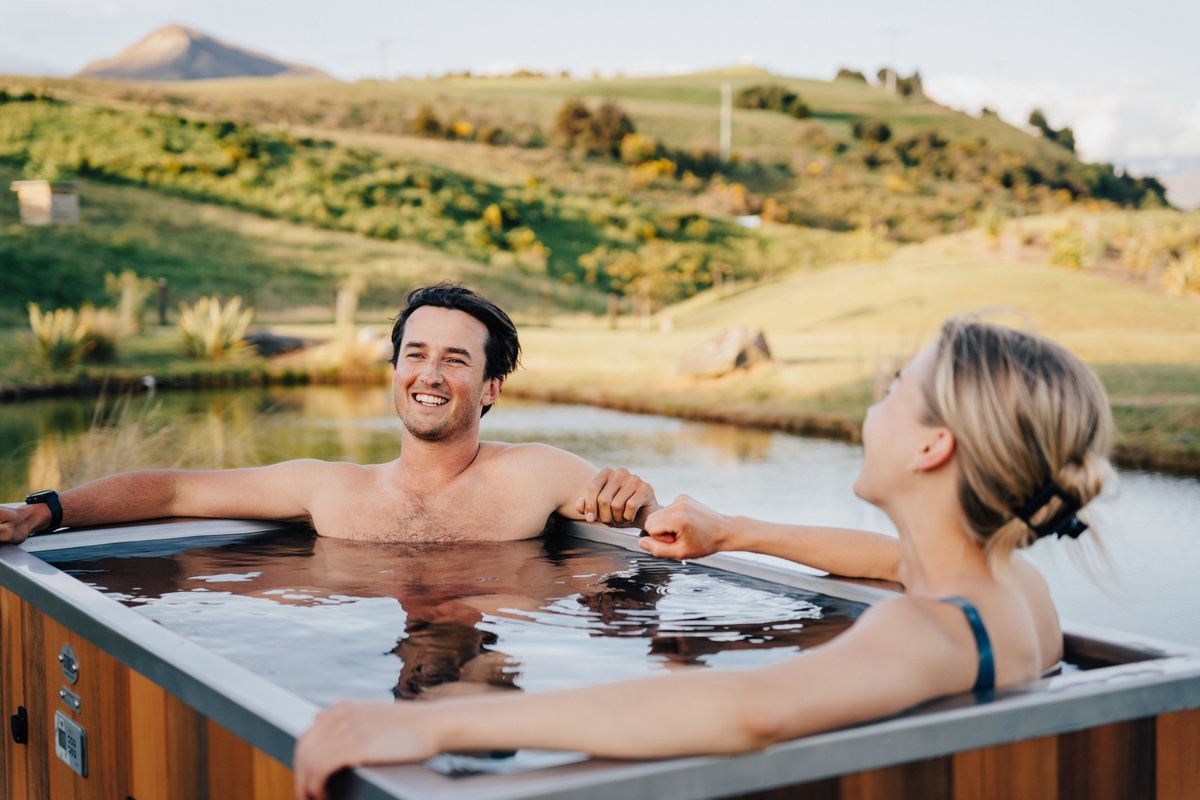
1.6m Electric Spa - Up to 41°C.
Pools, Spas and
baths, reimagined
Redefine your lifestyle with our premium stainless steel and cedar range.
Handcrafted in New Zealand
Whare Tui - Electric Spa - 1.6m